
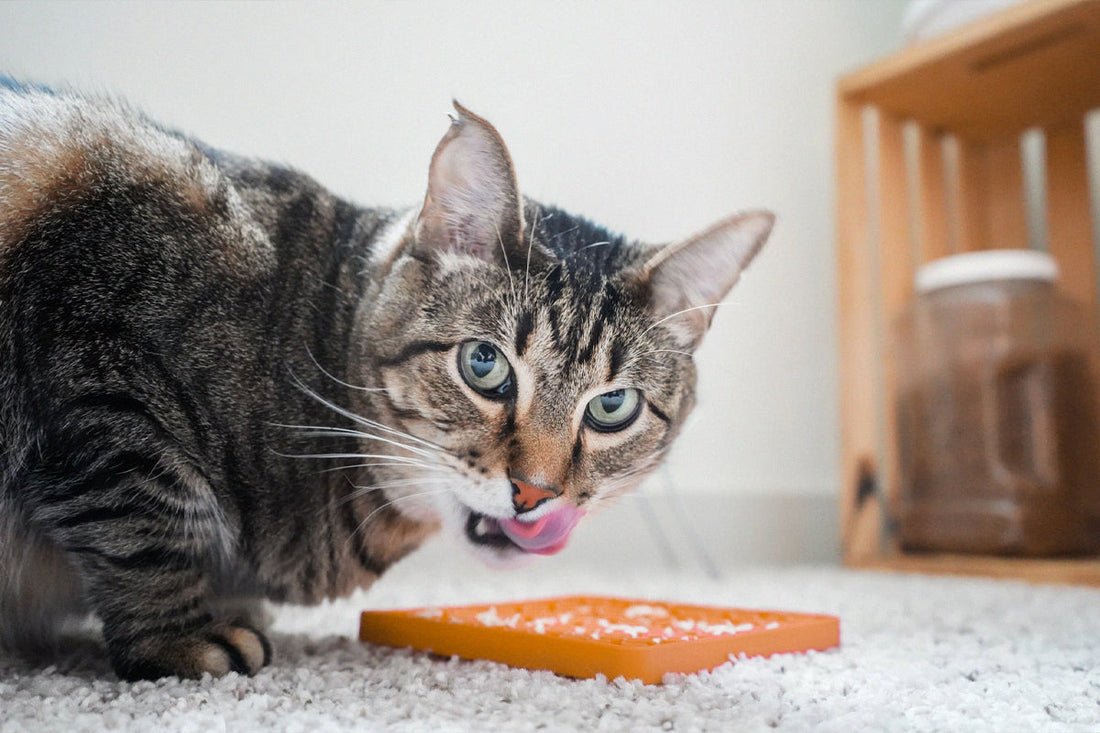
How To Use a Lick Mat for Cats: A Complete Step-by-Step Guide
Lick mats are one of the most consistently effective enrichment tools for cats, partly because they are simple, partly because they tap into something deeply instinctive, and partly because most cats take to them faster than almost any other enrichment product.
This guide covers everything: what a lick mat actually does, how to introduce one, what to put on it, how to make it last longer, and what to do if your cat is not interested.
What a Lick Mat Does and Why It Works
A lick mat is a flat silicone mat with a textured surface (ridges, grooves, bumps, or a combination) designed to hold soft food in a way that requires the cat to lick repeatedly to access it.
That sounds simple. The mechanism behind it is more interesting.
Cats lick for multiple reasons: grooming, feeding, and self-soothing. Extended repetitive licking triggers the release of endorphins, the same reward chemicals released during physical activity and play. This is why cats that groom themselves when stressed are effectively self-medicating, and why lick mat use tends to visibly calm anxious or wound-up cats within a few minutes of starting.
The texture of the mat matters because it slows the cat down. Instead of licking food off a smooth surface in seconds, the cat has to work the food out of grooves and channels. This extends feeding engagement from under a minute to 10 to 20 minutes, turning mealtime into a sustained mental and sensory activity.
Practical outcomes reported by cat owners using lick mats consistently:
- Reduced anxiety during high-stress events such as vet visits, grooming, fireworks, and thunderstorms
- Calmer behavior during periods when the owner is away
- Slower eating in cats that tend to gulp food and vomit
- Reduced boredom-driven behaviors including over-grooming, yowling, and destructive scratching
Step 1: Choose the Right Mat for Your Cat
Not all lick mats are the same. The main variables are texture complexity, size, and whether the mat has a suction base.
Texture complexity: A beginner mat has simple ridges or a grid pattern, easier to lick clean and less frustrating for cats that are new to enrichment. More complex mats (honeycomb patterns, flower textures, deep channels) hold food more securely and extend engagement longer, but can frustrate cats that have not yet built up the patience.
If your cat has never used a lick mat before, start with a simpler texture. You can move to a more complex mat once they are comfortable with the concept.
Size: Most single-cat lick mats are around 7 by 7 to 8 by 8 inches, which is sufficient for a single serving of food. Larger mats are useful if you want to use more filling or if you have a larger cat.
Suction base: A mat with suction cups on the back stays in place while the cat licks, which prevents the mat from sliding across the floor. This is especially useful for energetic lickers or hard floors. If the suction cups are not strong, they will lose grip on smooth surfaces over time.
Browse PetBrio's cat lick mats
Step 2: Choose Your Filling
The filling matters more than the mat. Pick the wrong thing and the cat will sniff it, walk away, and leave you wondering what went wrong.
Safe and effective options:
- Wet cat food: The simplest option. Most cats will engage immediately. Pate-style wet food spreads into the texture easily.
- Plain pumpkin puree (unseasoned, no additives): Cats are often surprisingly interested in pumpkin, and it supports digestive health. Confirm the can contains only pumpkin with no spices and no sweeteners.
- Unseasoned meat baby food: Chicken or turkey single-ingredient baby food with no onion, no garlic, and no salt is usually very palatable for cats and spreads well.
- Plain Greek yogurt (no added sugar): Some cats enjoy this; others are indifferent. Use small amounts only, as cats are lactose intolerant in large quantities, but a thin smear is fine for most.
- Tuna or salmon water: The liquid from canned fish packed in water (not oil or brine) can be spread thinly and is almost universally attractive to cats.
What to avoid:
- Anything containing onion, garlic, or chives, which are toxic to cats
- Xylitol, found in some peanut butters and human foods, which is toxic to cats
- Salt-heavy foods
- Sweetened or artificially flavored foods
- Anything your cat has a known sensitivity to
A thin, even spread works better than a thick layer. The goal is to make the cat work for the food. If you load the mat heavily, it becomes too easy and the session ends in 60 seconds.
Step 3: Introduce the Mat
First introduction matters. A cat that has a confusing or unrewarding first experience with a lick mat is harder to engage the second time.
How to do the first session:
- Choose a quiet time, not during a stressful moment in the house and not immediately before or after something the cat finds anxious.
- Spread the filling thinly and evenly into the mat texture.
- Place the mat on a flat, stable surface at floor level or on a surface the cat already uses comfortably.
- Let the cat approach on their own terms. Do not hold the mat toward them or position it in front of their nose. Let them discover it.
- Stay nearby but do not hover. Some cats are more comfortable engaging with a new object when their person is in the room; others prefer to investigate alone.
Most cats will begin licking within 30 to 60 seconds of investigating. If your cat is very food-motivated, the first engagement is likely to be immediate.
Step 4: Build a Routine
Lick mats work best as a consistent part of the cat's routine rather than an occasional novelty. Options for how to incorporate them:
At mealtimes: Replace one of the day's meals (or part of it) with a lick mat spread with wet food. This works particularly well for cats that eat too quickly.
Before high-stress events: Use the mat 15 to 20 minutes before anything that typically causes anxiety, including grooming sessions, car journeys, vet visits, or fireworks. The endorphin release from licking can measurably reduce the stress response.
During alone time: Prepare the mat before you leave for work and place it when you go. This gives the cat something engaging to do in the first 15 to 20 minutes after you leave, often the period when separation anxiety is highest.
As part of a play wind-down: End an active wand-toy play session with a lick mat. The active play satisfies the predatory cycle, and the lick mat provides the calm-down that follows a successful hunt.
Step 5: Freeze It to Extend Engagement
A standard lick mat session lasts 10 to 20 minutes. A frozen lick mat session can last 30 to 45 minutes and is significantly more valuable for cats that need longer-term occupation or more intense calming.
How to freeze:
- Spread the filling as normal.
- Place the mat flat in the freezer for 1 to 4 hours, or until fully frozen.
- Serve directly from the freezer. The cat will lick at the frozen surface, which thaws slowly and releases food gradually.
Best fillings for freezing: wet cat food, pumpkin puree, and tuna water all freeze and thaw well. Greek yogurt freezes well but can become too hard in thick layers, so apply in thin spreads.
Frozen mats are especially useful in summer, for cats recovering from dental procedures or mouth discomfort, and for highly food-motivated cats that clear a standard mat too quickly.
Step 6: Clean the Mat Properly
A lick mat that is not cleaned thoroughly after each use becomes a bacteria breeding ground, and the lingering smell of old food can make cats reluctant to use it again.
Most silicone lick mats are dishwasher safe, which is the easiest and most thorough cleaning method. Place the mat on the top rack.
If hand-washing, use warm water and dish soap, working the bristles of a brush (or your fingers) into all the texture grooves. Rinse thoroughly. Food residue left in deep grooves will ferment quickly.
Allow the mat to dry completely before storing or re-using.
What To Do If Your Cat Is Not Interested
Some cats, particularly those that were never food-motivated as kittens or those that are very food-selective, take longer to engage with lick mats. A few approaches that work:
Start with irresistible food. If your standard wet food is not triggering interest, try something highly aromatic: tuna water, baby food chicken, or a small amount of a treat the cat already responds strongly to. Once the cat associates the mat with something rewarding, you can transition to more neutral fillings.
Rub the filling into the grooves with your finger. Sometimes spreading is not enough. Pressing the food into the texture ensures it is present in the grooves rather than just sitting on top of the ridges.
Let them watch you prepare it. Some cats are curious about food preparation and will approach the mat as an extension of that interest. Spreading the filling in front of them can trigger engagement.
Try a different texture. If the mat has a very complex pattern, switch to a simpler one. Some cats are initially frustrated by deep grooves that make it difficult to access the food. A simpler texture lowers the barrier to entry.
Be patient. Most cats come around within 3 to 5 sessions. The first introduction often produces the least engagement.
Frequently Asked Questions
How often should I give my cat a lick mat?
Daily use is fine for most cats, particularly if you are using it as a mealtime replacement or enrichment tool rather than a supplement. If you are adding it on top of regular meals, keep portions small to avoid overfeeding.
How much food should I put on the lick mat?
Roughly 1 to 2 tablespoons of wet food is sufficient for most sessions. The goal is engagement, not a full meal. If you are replacing a meal with the lick mat, adjust to a full meal-sized portion spread across the surface.
Can kittens use lick mats?
Yes, from around 8 to 10 weeks when they have started eating wet food. Use simple textures and very small amounts of food. Lick mats can be useful for kittens that are transitioning from milk and need encouragement with solid food.
My cat clears the mat in under a minute. What should I do?
Freeze it. This is the most effective solution. Alternatively, move to a mat with a more complex texture, or use a thinner spread that requires more work per lick.
Is it safe to leave a cat unsupervised with a lick mat?
Generally yes. Lick mats are safe unattended for the vast majority of cats. If your cat shows any tendency to chew or tear at silicone objects, supervise initially and check the mat for damage after each session. Replace any mat that shows significant chewing damage.
Can I use a lick mat for a cat on a prescription diet?
Yes, as long as the filling is appropriate for the diet. Use the cat's prescription wet food. Consult your vet if you are unsure whether a specific filling is compatible with the dietary restriction.
Browse PetBrio's range of cat lick mats, silicone, freezer-safe, and sourced for quality. Shop cat lick mats
About the Petbrio Team > We are passionate pet parents dedicated to cognitive enrichment. Because we know that mental stimulation is just as important as physical exercise, we personally test every puzzle feeder, lick mat, and interactive toy on Petbrio with our own pets. If it doesn't pass our rigorous standards for durability and engagement, it doesn't make it to our store.
